LESCO Detection Bill: Challenge It Step by Step 2026
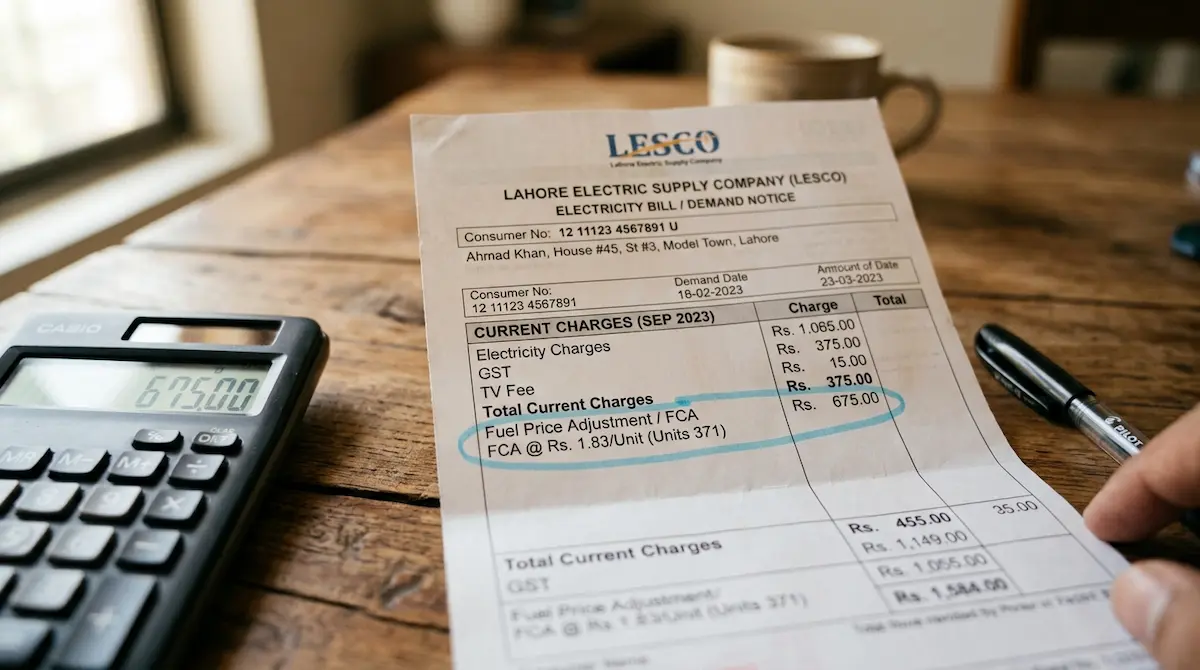
A detection bill is an extra charge LESCO adds when it decides your meter under-recorded what you actually used — through slowness, a fault, or theft. You can challenge it. The route runs from your sub division office, to LESCO’s review committee, to its Central Monitoring Cell, and finally to NEPRA — and the entire case rests on one document most consumers never open: NEPRA’s Consumer Service Manual.
Win or lose depends less on how unfair the bill feels and more on which rule it breaks. Here is how to find that rule and use it.
First, know which detection bill you have
Before you write a word, settle which kind you’re holding. The rules split sharply.
- Slowness or a defective meter: LESCO may recover unbilled units for two billing cycles only. NEPRA held that line in 2024 and refused the distribution companies’ request to stretch it.
- Theft or direct hooking (kunda): recovery can reach three billing cycles for a home connection, or six months only with Chief Executive approval.
So if a bill charges six months of “slow meter” units, it already sits outside the rule. That single mismatch is often the quickest path to a revision.
A meter defect is not proof of theft
The Consumer Service Manual states it plainly: a defect in the meter, on its own, does not establish illegal use. LESCO has to show consumption was actually stolen — not merely that a meter misbehaved.
It also cannot raise a detection bill on a meter with a broken or bogus seal unless theft is separately proven. If a faulty seal is the only evidence, the bill is thin.
No notice, no bill
LESCO must serve you a written notice before it finalises a detection charge, with a window to reply. Skip that step and the bill doesn’t hold — the Lahore High Court has ruled that a detection amount billed without notice must be withdrawn.
Check the sequence on your own case. Did a notice reach you first, with time to respond? Or did the amount simply surface inside your monthly bill? A missing notice is grounds by itself.
Don’t pay it first
Paying a detection bill reads as acceptance and weakens your review. Hold payment while you dispute, and move before the seven-day period on the notice closes, since that clock is tied to the disconnection warning.
If disconnection is threatened while your case is open, a petition to the Electric Inspector or a civil court can hold it off until the matter is decided.
Build the discrepancy, not an argument
Your case is evidence, not protest. Two things carry it.
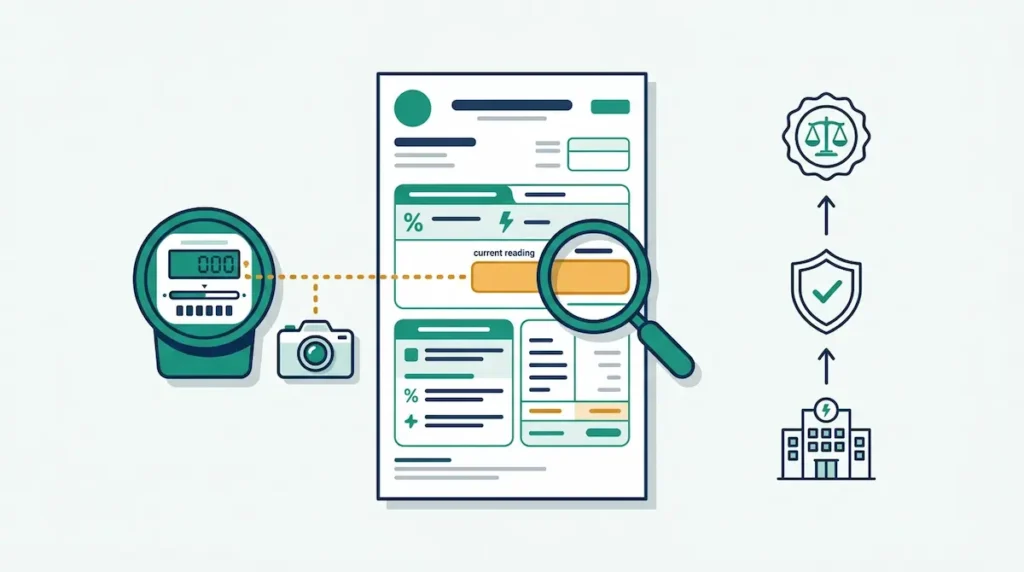
Photograph your meter the same day with the reading in frame, then set it beside the “current reading” printed on the detection bill. A gap between the two is your core proof.
Next, pull several months of usage from your past bills to establish a steady pattern. A detection charge that assumes consumption far above your settled average has to account for the jump — and usually can’t.
The route, and who actually decides
Each rung has an officer who can revise the bill. Matching your request to the right one saves weeks.
- Sub division office. Submit a written review application. State your reference number, the disputed month, the exact units you contest, and the rule the bill breaks — the two-cycle limit, the missing notice, or the defect-not-theft point. Keep it to the facts.
- Review committee. If the sub division won’t move, this is the named authority for revising the quantum of detected units. It sits under the next senior officer, and you are entitled to a personal hearing. Attend it.
- Central Monitoring Cell. Unresolved cases that the sub division failed to settle go to LESCO’s head-office monitoring cell.
- NEPRA. Beyond LESCO, the regulator weighs your complaint directly against the Consumer Service Manual. File it through CCMS so every stage carries one reference number, and that number becomes the trail NEPRA follows to your file.
What a strong review application says
Short and specific beats long and emotional. Name the bill by month and amount. Quote the clause it violates. Attach the meter photo, the notice (or note its absence), and your recent consumption history. Ask for a specific outcome: withdrawal, or revision to the units the rule actually permits.
A consumer who cites the two-cycle limit and shows a matching photo is a different case to handle than one who only says the bill is too high.
Frequently asked questions
Is a LESCO detection bill legal without a notice?
No. A prior written notice is required. A bill served without one can be withdrawn on that ground alone.
How many months can a detection bill cover?
Two billing cycles for slowness or a defective meter. Up to three cycles for a domestic theft case, and six months only with Chief Executive approval.
Should I pay before disputing?
No. Paying signals acceptance. Dispute first, inside the notice period, and seek a stay if disconnection is threatened.
The detection bill is the one charge most people pay without a fight, because it arrives wrapped in the language of a penalty. Read against the Consumer Service Manual, most of them have a seam. Find it, photograph your meter, and route the case properly.